
Co-hosting on Turo is one of the fastest ways to build a car-sharing business without buying vehicles. You manage cars owned by other people -- handling pricing, guest communication, cleaning, and maintenance -- and split the revenue.
Done right, co-hosting lets you scale a fleet with minimal capital. Done wrong, you burn through time and money on vehicles that don't cover their costs. This guide covers everything from finding your first vehicle owner to scaling operations profitably.
Getting Started with Turo Co-Hosting
A real co-host breaks down how the business model works and what to expect.

What Is Turo Co-Hosting?
Co-hosting lets you manage vehicles you don't own on Turo. The owner provides the car, you handle everything else:
- Listing optimization -- photos, descriptions, pricing strategy
- Guest communication -- inquiries, booking confirmations, support
- Vehicle turnover -- cleaning, inspections, key exchanges
- Maintenance coordination -- repairs, oil changes, tire rotations
- Damage claims -- documentation, filing, recovery
In return, you and the owner split the revenue based on an agreed percentage. The owner gets passive income from a car that would otherwise sit in their driveway. You get to build a fleet without buying vehicles.
How Revenue Splits Work
The revenue split is the core of every co-hosting arrangement. There are two common structures:
Common Co-Hosting Split Structures
| Split | Owner Gets | Co-Host Gets | Who Covers Costs | Best For |
|---|---|---|---|---|
| 70/30 | 70% of revenue | 30% of revenue | Owner covers vehicle costs (insurance, maintenance, loan) | Most common. Simple, predictable for owners. |
| 50/50 | 50% of revenue | 50% of revenue | Both share costs equally | True partnerships where both parties are actively involved. |
Here's what a co-host split report looks like — you can generate one for any vehicle in under a minute:

Finding Vehicle Owners
The hardest part of co-hosting isn't operations -- it's sourcing vehicles. Here's where experienced co-hosts find owners:
Your Network First
- Friends and family with underused vehicles
- Colleagues who travel frequently
- People you know who already own multiple cars
Turo's Co-Host Marketplace
Turo has a built-in marketplace where vehicle owners can find co-hosts. List yourself as available and optimize your profile with your track record.
Local Outreach
- Car enthusiasts at meetups and shows
- Real estate investors (they understand passive income)
- Dealership owners with excess inventory
- Facebook groups and Nextdoor posts
The Pitch That Works
Lead with transparency. Show them a sample P&L statement, explain exactly how revenue is split, and offer a trial period. Professional financial reporting is the #1 trust builder -- owners stay when they can see exactly what their car earned.
Setting Up Your Operations
Before you take on more than a few vehicles, you need systems. The co-hosts who fail at scale are the ones who tried to manage 15 cars with text messages and memory.
Guest Communication
Guest messages are the biggest time sink. You need:
- Fast response times (Turo rewards hosts who respond within 1 hour)
- Professional templates for common scenarios (booking confirmations, check-in instructions, issue resolution)
- A system for handling urgent messages (lockouts, accidents, breakdowns)
AI-powered tools can monitor and triage your inbox -- flagging urgent messages so you respond fast instead of scanning everything.
Vehicle Turnover
Build a repeatable process for every vehicle return:
- Inspect -- walk the vehicle, check all panels, interior, wheels
- Document -- photos before and after every trip (this protects you on damage claims)
- Clean -- interior detail, exterior wash, restock supplies
- Prep -- check fuel level, tire pressure, reset settings
Budget $15-30 per turnover depending on your market and whether you clean yourself or hire help.
Maintenance & Repairs
Track every maintenance event per vehicle. Owners want to know their car is being cared for, and you need to know which vehicles are costing you money.
Tracking Finances Per Vehicle
This is where most co-hosts lose money without realizing it. If you're not tracking costs per vehicle, you don't actually know which cars are profitable.
What to Track
- Revenue -- gross trip income per vehicle per month
- Turo fees -- platform commission (already deducted from payout)
- Cleaning/turnover -- $15-30 per trip
- Maintenance -- oil changes, tires, brake pads, windshield wipers
- Repairs -- body work, mechanical issues
- Insurance -- commercial policy costs allocated per vehicle
- Parking/storage -- if applicable
- Gas/charging -- fuel you add between trips
Owner Statements
Professional owner statements are the #1 retention tool. Owners who can see exactly what their car earned, what was spent, and what their net payout is -- they stay. Owners who get a Venmo payment with no context -- they leave.
FleetSnap's earnings tool imports your Turo CSV and generates per-vehicle P&L statements automatically. No spreadsheets, no formulas.
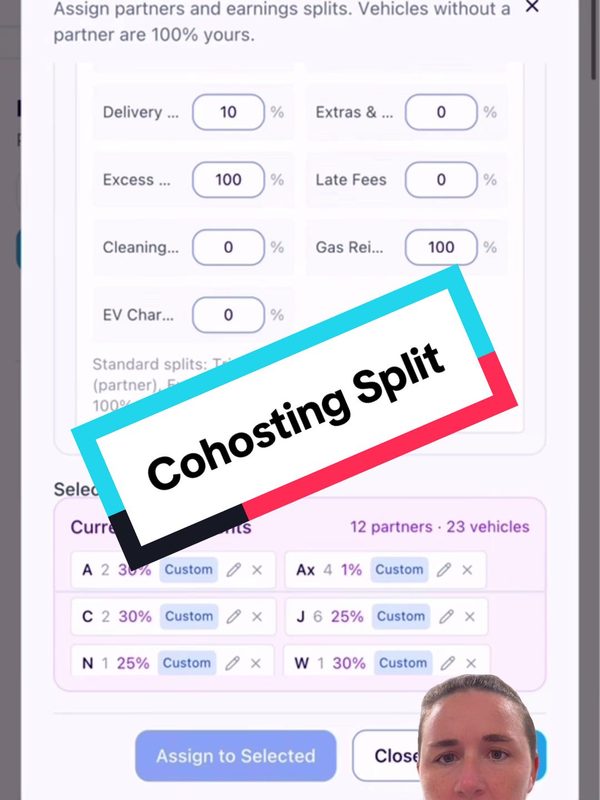
Splitting co-host payouts without partner disputes
Si Es Vida Rentals shows how they generate co-host slips with FleetSnap's free tool so every owner sees exactly what they're owed.
Scaling Past 10 Vehicles
The jump from 5 to 15 vehicles is where co-hosting businesses either professionalize or collapse. Manual processes that worked with a few cars break down fast.
What Changes at Scale
- Guest messages multiply -- 15 vehicles means 30-50+ messages per day
- Turnovers overlap -- multiple cars returning and going out the same day
- Owner management -- each owner wants updates, statements, and responsiveness
- Damage claims compound -- at 15+ vehicles, you'll have claims every month
- Staffing decisions -- you can't do everything yourself anymore
What You Need
- AI inbox monitoring -- let AI flag and prioritize urgent guest messages so nothing slips while you scale
- Automated financial reporting -- owner statements generated from your Turo data, not built in spreadsheets
- Damage documentation system -- before/after photos for every trip, instant repair estimates
- Standard operating procedures -- written SOPs for cleaning, inspections, key exchanges, and maintenance
Common Mistakes to Avoid
- Not tracking per-vehicle costs -- you think you're profitable until you add up the cleaning, maintenance, and gas. Track everything.
- Accepting any vehicle -- not every car is worth co-hosting. Old cars with high maintenance costs or low-demand models will lose you money. Run the numbers first.
- Skipping the owner agreement -- get everything in writing: split percentages, who covers which expenses, termination terms, damage liability.
- No pre/post-trip photos -- when damage happens (and it will), you need documentation. No photos = no claim.
- Scaling before systems -- build your SOPs and tools at 3-5 vehicles. Don't wait until you're drowning at 15.
- Ignoring owner relationships -- owners are your partners. Regular financial reports, proactive maintenance updates, and transparent communication keep them with you.